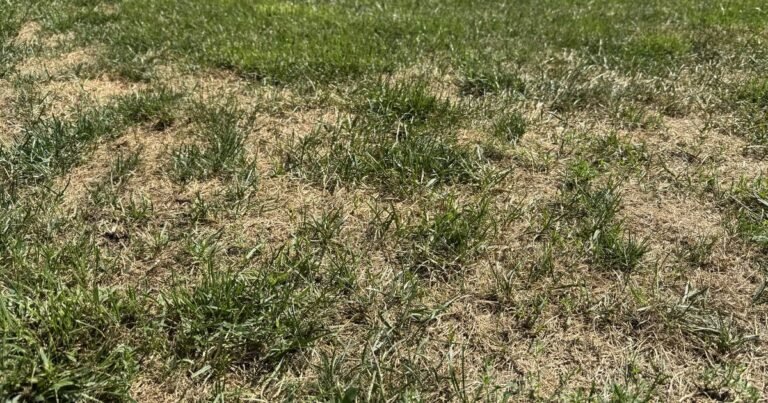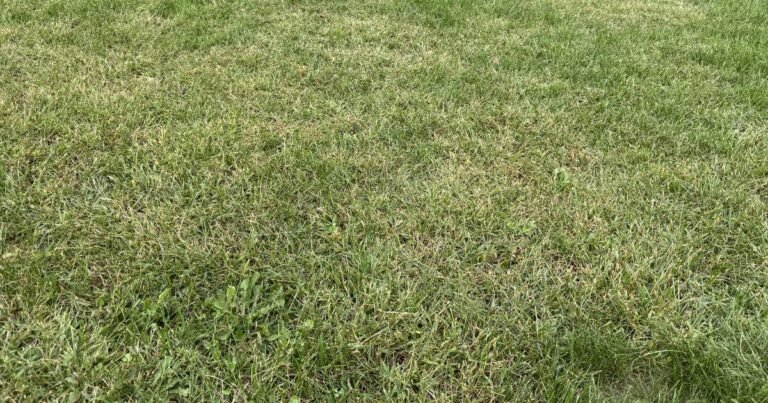
What to Do With Leaves on Your Lawn (and What Not To)
Written in central Wisconsin, October 2026, from a from a 10,000 square foot Kentucky bluegrass lawn ringed by forty or fifty red oaks and maples. Timing below is for the upper Midwest — if your leaves come down in December, shift everything accordingly.
The question people ask about leaves on your lawn is whether to rake or mulch. It’s the wrong question, because the answer isn’t one or the other — it depends entirely on how deep the leaves are, how wet they are, and what kind of tree dropped them.
Here’s the part that surprises people: the research says you can mulch far more leaf cover than you’d think, and doing so is measurably better for the lawn than hauling it away. But there’s a threshold where it flips, and crossing it kills grass.
What to Do With Leaves on Your Lawn: The Short Answer
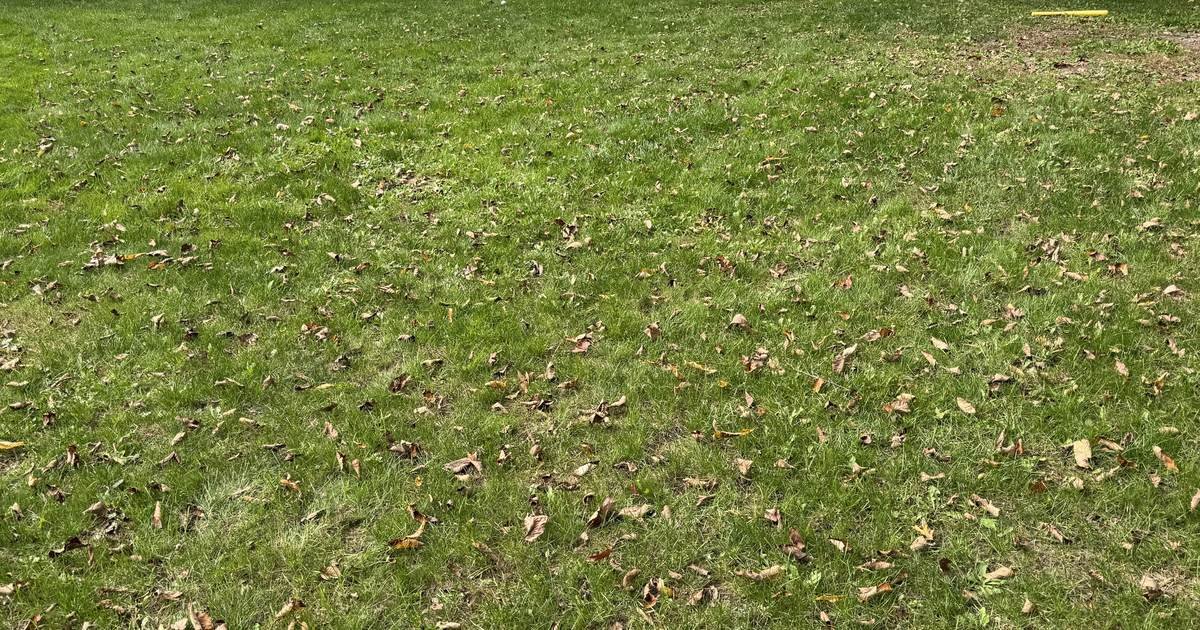
If you can still see grass through the leaves, mow them in. If the lawn has disappeared under a solid mat, get some of it off first, then mow the rest in.
That’s it. Everything below is how to tell which one you’re looking at and how to do it properly.
What Mulching Actually Does to a Lawn
This isn’t folk advice. It’s one of the better-studied questions in turf management, and the results are more emphatic than most people realize.
Michigan State University ran multi-year trials mulching fallen leaves into cool-season turf. Their findings: after three years of mulching, dandelion and crabgrass populations dropped dramatically — in some plots, close to complete elimination. The mechanism is simple. Shredded leaf fragments sift down and cover the bare soil between grass plants, and bare soil is exactly where weed seed germinates. You’re not killing weeds; you’re denying them the ground they need.
The same research found no downside. Mulching had no adverse effect on turf quality, color, growth, soil pH, or disease pressure. Purdue’s work reached the same conclusion at high mulching rates.
And it does not cause thatch. That myth is stubborn and wrong — thatch is built from stems and roots, not leaf tissue, and leaf fragments decompose too quickly to accumulate.
The Nutrient Claim Is Oversold
You’ll read that mulched leaves feed your lawn and replace fertilizer. That’s true in direction and badly overstated in size, and I’d rather give you the arithmetic than the slogan.
University of Illinois Extension puts two inches of mulched leaves at roughly 3.44 pounds of nitrogen per acre. An acre is about 43,500 square feet. So per 1,000 square feet — the unit lawn care actually uses — that’s under a tenth of a pound of nitrogen.
Your lawn wants two to four pounds per 1,000 square feet across a year. Mulched leaves supply a rounding error against that.
So mulch them, absolutely — for the weed suppression, the organic matter, the soil biology, and the fact that it’s free and faster than raking. Just don’t skip a fall fertilizer application because you mulched. If you want to know what you’re actually putting down when you do feed it, what the numbers on a fertilizer bag mean covers the math.
How to Mulch Leaves Properly
Most people who try this once and decide it doesn’t work made the same three mistakes.
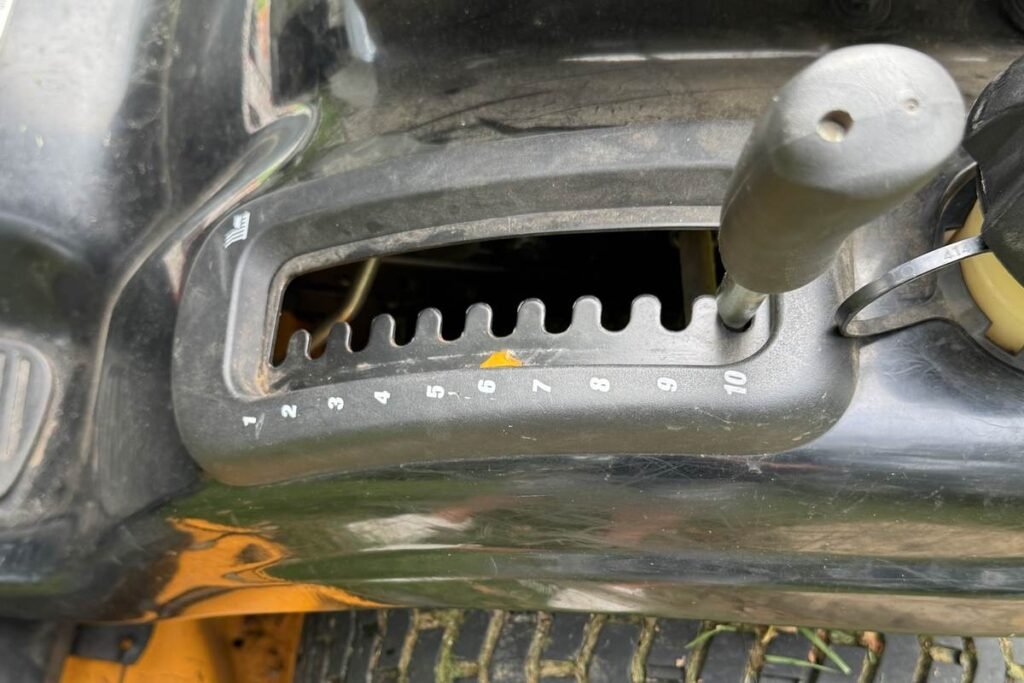
- Deck at its highest setting. Not your normal cutting height — the top. You’re chopping leaves, not cutting grass, and you need the clearance and the airflow.
- Bagger off, chute closed if you can. The leaves need to recirculate under the deck to get chopped small enough. A bagger defeats the whole exercise.
- Two passes minimum, the second at ninety degrees to the first. One pass shreds leaves into pieces that are still too big. The cross pass is what reduces them to confetti that falls through the canopy.
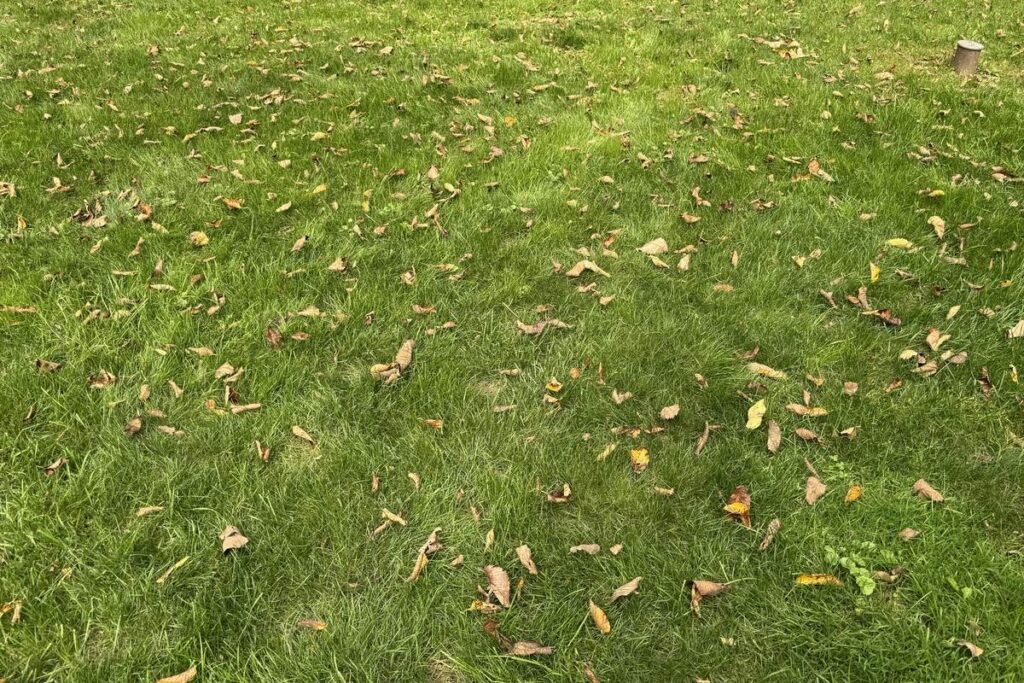
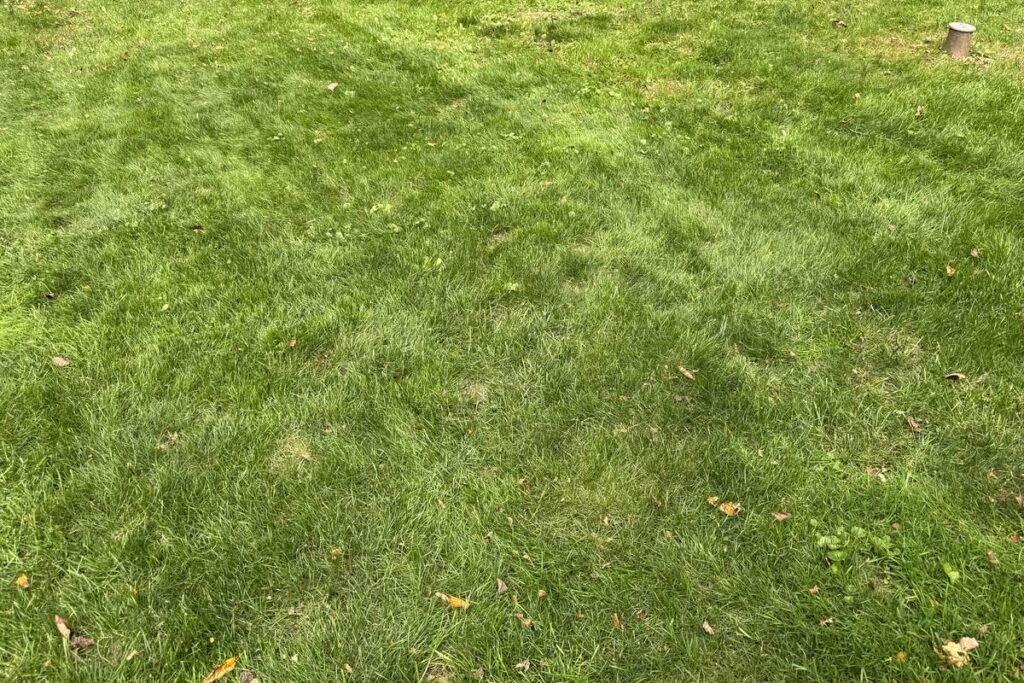
Do it when the leaves are dry. Wet leaves clump in the deck, mat on the surface instead of sifting down, and turn the job into a mess. Early afternoon after a dry morning is ideal.
And do it often. Once a week during the drop, not once at the end. Mulching a light layer weekly is easy; mulching the whole season’s accumulation in one go is what makes people give up on the idea.
Your mower’s capacity matters more than any rule of thumb. The Michigan State work found that depths up to about six inches can be mulched successfully, but that depends heavily on the machine. Watch what’s left after two passes: if you can see grass and the fragments are small, it worked. If there’s a layer of half-chopped leaves sitting on top, you went past what your mower can handle.
Should You Mulch or Remove? Check Here
Mulch Them or Take Them Off?
Four questions about what’s on your lawn right now. Answer from what you can see standing in the yard.
When to Remove Instead
Four situations where mulching is the wrong call.
The lawn has vanished. If you genuinely cannot see grass anywhere, that’s more than your mower will process. Remove enough to get back to visible turf, then mulch the rest.
They’re wet and matted. A wet mat that’s been sitting for a week has already started to seal the surface. Get it off. Mulching it just presses it down.
Heavy oak, all at once. Oak leaves are high in lignin and break down far more slowly than maple. A thin layer is fine; a thick single-species oak layer sits there into spring. Mulch what you can and remove the rest.
You’re heading into snow. Anything still matted on the lawn when it freezes creates the conditions snow mold wants — damp, dark, and insulated all winter. The last mulching pass of the season should leave the lawn visibly clear, not coated.
The Wisconsin Part Nobody Else Will Tell You
Here is the thing that changed how I handle leaves, and I’ve never seen it in a lawn care article.
The U.S. Geological Survey ran a three-year study in Madison comparing two residential neighborhoods — one with an active leaf collection and street cleaning program, one without. The results are startling. Without leaf removal, fall leaf litter accounted for 56 percent of the entire year’s phosphorus load in urban stormwater. With removal, that dropped to 16 percent. Total phosphorus loads fell by 84 percent.
Leaves sitting in the gutter leach phosphorus into rainwater, which goes down the storm drain and into the lake. In a state where phosphorus feeds the algae blooms that close beaches every August, that’s not a small thing.
Which reframes one very common habit: blowing leaves into the street is the single worst thing you can do with them. Not because it’s untidy — because the street is a direct pipe to surface water, and leaves are one of the largest phosphorus sources there is.
If your municipality has curbside collection, follow their timing and put leaves at the curb close to pickup rather than weeks early. If there’s no program, mulch them into the lawn or compost them. Either way, keep them out of the gutter.
This is the same regulatory logic behind Wisconsin’s phosphorus restrictions on lawn fertilizer, which the fertilizer numbers article covers — the statute also requires sweeping fertilizer off hard surfaces for exactly this reason. The state spent years restricting the middle number on your fertilizer bag. Meanwhile, the leaves in the gutter were contributing more than half the annual load.
Not All Leaves Behave the Same
Maple, ash, birch, elm: mulch beautifully. Thin, low in lignin, gone by spring.
Oak: slow. Tough, leathery, and high in lignin. Mine are red oaks, and I still find recognizable fragments in the lawn the following spring — they get chopped fine enough to sift down; they just take longer than a season to disappear. Mulch them in thinner layers and expect them to linger.
Black walnut: fine on the lawn — grass tolerates juglone. Keep them out of the vegetable garden and away from tomatoes, which don’t.
Pine needles: not really a mulching job. They shed water, resist chopping, and are better raked and used in beds.
My Own Leaves
I have forty or fifty trees around my lawn — not in it, but right along every edge of it — mostly red oaks with a few maples mixed in. For years I bagged everything with the mower and dumped it in the woods, which is a lot of trips and a lot of stopping to empty a bagger. The last few times I’ve mulched instead, and the honest surprise is how much less work it is. The oaks take more passes than maple would, and I still find oak fragments sitting in the lawn the following spring — they’re slower to break down than anything else that falls here.
Four Things Not to Do
- Don’t blow leaves into the street. More than half the annual phosphorus load in urban stormwater comes from exactly that.
- Don’t wait until they’re all down. Weekly passes through a light layer are easy. One pass through eight weeks of accumulation is what breaks mowers and backs.
- Don’t mulch wet leaves. They clump, mat, and smother instead of sifting down.
- Don’t burn them. Many Wisconsin municipalities prohibit it outright; permits are required in most places that allow it, and the smoke is worse for your neighbors than the leaves ever were for your lawn.
The Short Version
- If you can see grass through the leaves, mow them in — deck at the highest setting, no bagger, two passes at ninety degrees
- Three years of mulching cuts dandelion and crabgrass populations dramatically, because leaf fragments cover the bare soil weeds germinate in
- Mulching does not cause thatch, and does not meaningfully replace fertilizer — both claims are wrong in opposite directions
- Mulch dry, mulch weekly, and don’t let the lawn disappear before you start
- Leaves in the street are the largest single phosphorus source in urban stormwater. Keep them out of the gutter.
The last mowing of the year deserves its own thinking — height, timing, and what to leave the lawn at going into snow. That’s the next article.
The Lawn Product Checklist
What to actually buy, what to skip, and what the label should say — a one-page checklist you can take to the store.