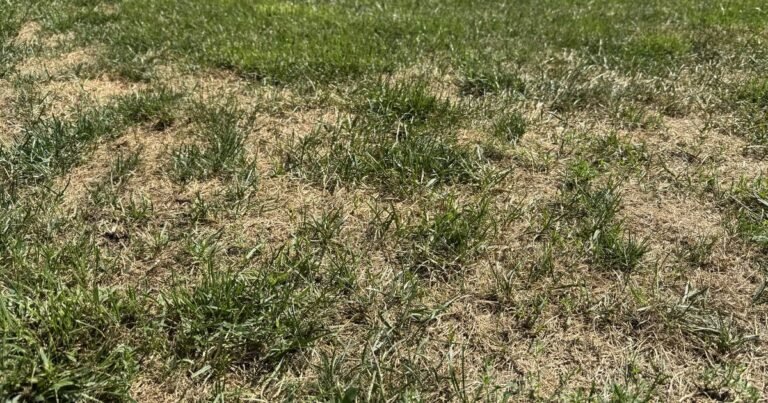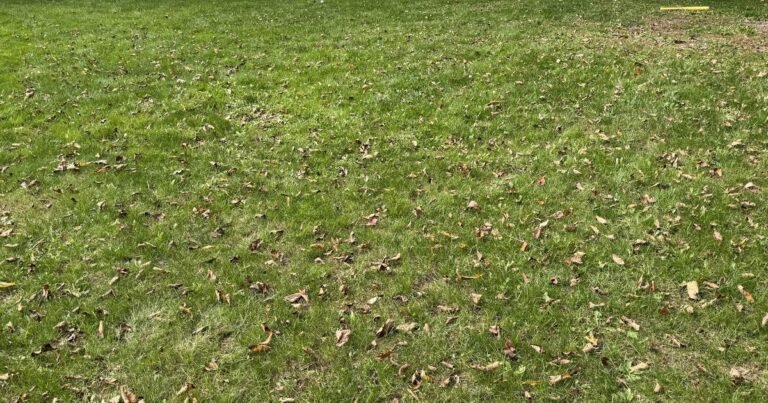
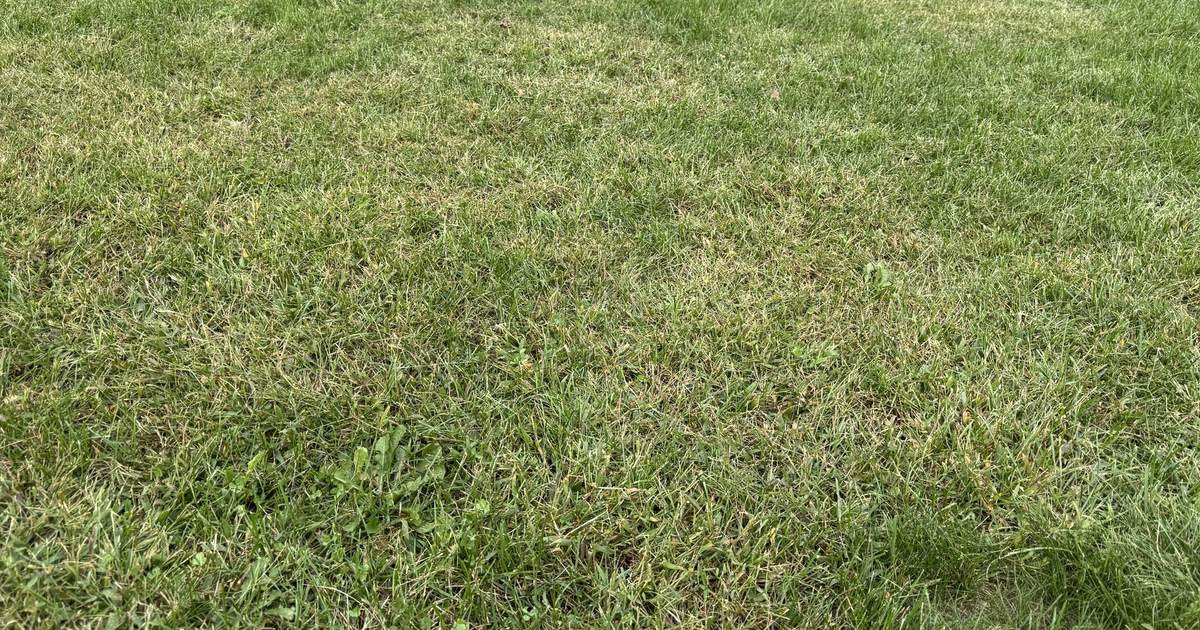
Why Your Grass Is Turning Yellow — 4 Causes, Ranked
Written in central Wisconsin, September 2026, from a 10,000-square-foot Kentucky bluegrass lawn. Cool-season grass in the north yellows for different reasons than bermuda or zoysia does in the south — if you’re below the transition zone, some of this won’t apply to you.
Yellow grass is the most common lawn problem there is, and it’s the one people most often fix in the wrong order. They buy fertilizer. Sometimes fertilizer is the answer. More often, the lawn is yellow for a reason fertilizer can’t touch, and the bag gets emptied onto a problem it was never going to solve.
There are four causes that account for nearly all of it. Three of the four have fixes that cost nothing. The trick isn’t knowing the fixes — it’s telling which one you’re looking at, and that comes down to three things you can check in about ten minutes.
Ranked by how often they’re actually the culprit.
First: Look at the Shape of the Yellow
Before anything else, stand back and answer one question. Is the whole lawn pale, or are there yellow areas inside green areas?
Uniform — the entire lawn is a shade lighter than it should be, with no clear boundaries — points to causes 1 and 2 below. Something is affecting every plant equally, which means it’s about feeding or cutting.
Patchy — yellow areas with edges you could trace, green grass right next to them — points to causes 3 and 4. Something is happening in specific spots, which means it’s about water, soil, or damage.
That single observation cuts the possibilities in half before you’ve knelt.
Cause 1: Not Enough Nitrogen
This is the most common one, and it’s the only one on the list that fertilizer actually fixes.
What it looks like: uniform pale green to yellow across the whole lawn. The older, lower blades go first while the new growth at the top stays greener — nitrogen is mobile inside the plant, so a hungry lawn pulls it out of old leaves to feed new ones. Growth slows down. You notice you’re mowing less often than you were.
How to confirm it: think about when you last fed it. If the answer is spring, or last year, or never, you have your answer. Cool-season lawns want somewhere between two and four pounds of nitrogen per 1,000 square feet across a year, and most home lawns get considerably less.
The fix: a nitrogen-forward fertilizer at about one pound of actual nitrogen per 1,000 square feet. Early September and again in late October are the highest-value times of the entire year for cool-season grass in the north.
The part that trips people up is working out how much nitrogen is actually in the bag, because the number on the front is a percentage, not a quantity. What the numbers on a fertilizer bag mean covers that in full, and the fertilizer cost calculator does the arithmetic for you.
Cause 2: A Dull Mower Blade
This is the one almost nobody checks, and it’s responsible for more yellow lawns than it gets credit for.
What it looks like: the lawn takes on a hazy, whitish-yellow cast a day or two after mowing, then partly recovers, then does it again after the next cut. Uniform across the whole lawn, because the mower goes everywhere.
How to confirm it: kneel and look at the tips of the blades. A sharp mower slices; the cut end is clean and flat. A dull mower tears; the tip is shredded, frayed, and the torn edge dies back and browns within a day. Once you’ve seen the difference, you can’t unsee it.
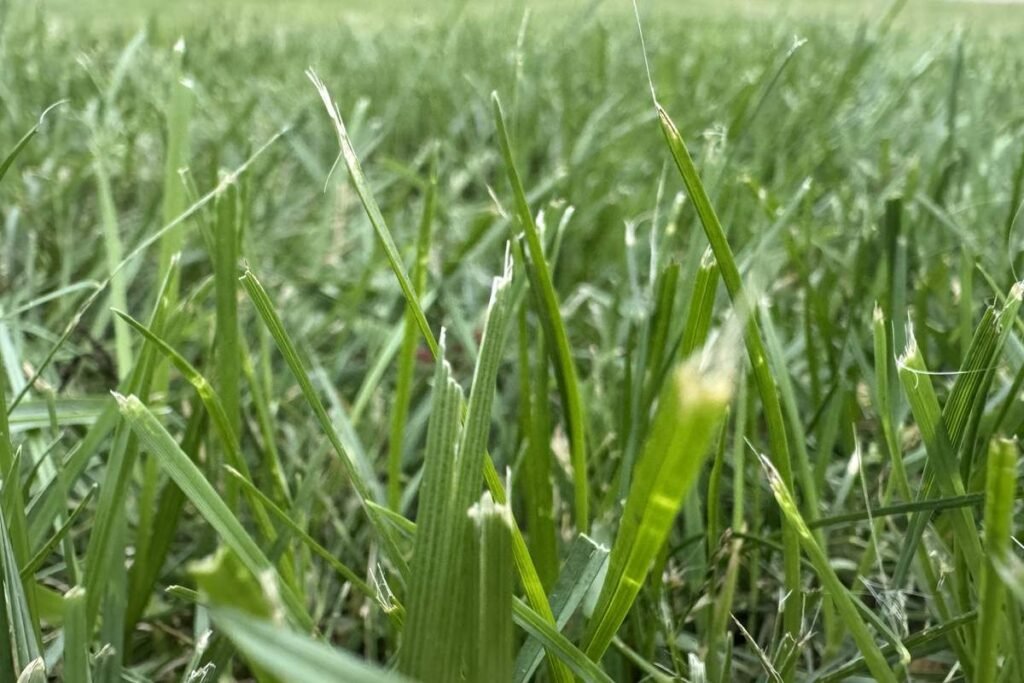
The fix: sharpen the blade. It costs nothing but an hour, and most homeowners should do it two or three times a season. Torn tips also lose more water and give disease an easy entry point, so this is worth more than the color alone.
Disconnect the spark plug before you touch the blade. Every time, no exceptions. Tip the mower with the carburetor side up so fuel doesn’t run into the air filter.
Cause 3: Water — Too Little, or Too Much
Both extremes produce yellow grass, which is why “water it more” is such unreliable advice.
Too little shows up as a bluish-gray cast first, before any yellow. The classic test is footprints: walk across the lawn and look behind you. Healthy turf springs back, and your tracks vanish. Drought-stressed turf stays flattened, because the blades don’t have the water pressure to stand up. Left longer, it goes straw-colored, usually starting on slopes, near driveways, and anywhere the soil is thinnest.
Too much looks different. The grass yellows but stays soft and limp, the ground stays damp between waterings, and the yellowing often concentrates in low spots where water collects. Roots suffocate in saturated soil, and a plant with damaged roots can’t take up nitrogen even when there’s plenty of it in the soil.
How to confirm it — the screwdriver test: push a long screwdriver into the lawn. In soil with adequate moisture, it slides in six inches with steady hand pressure. If it stops at two inches, you’re either dry or compacted — and if the soil that comes up is dusty, it’s dry. If it goes in easily and comes out with mud on it, and the lawn is still yellow, you’re overwatering.
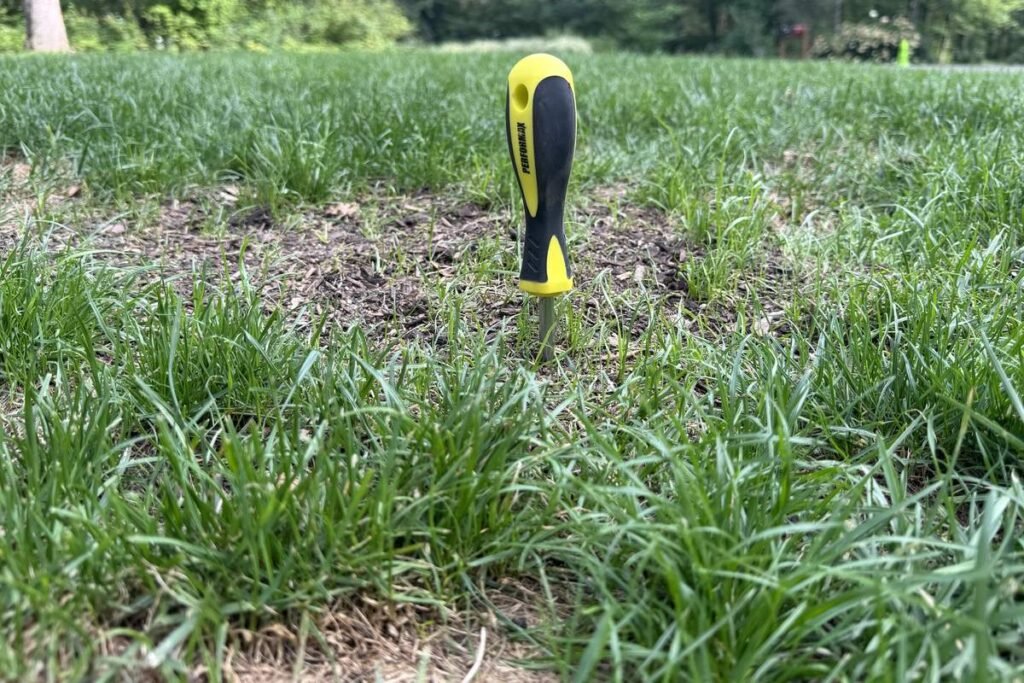
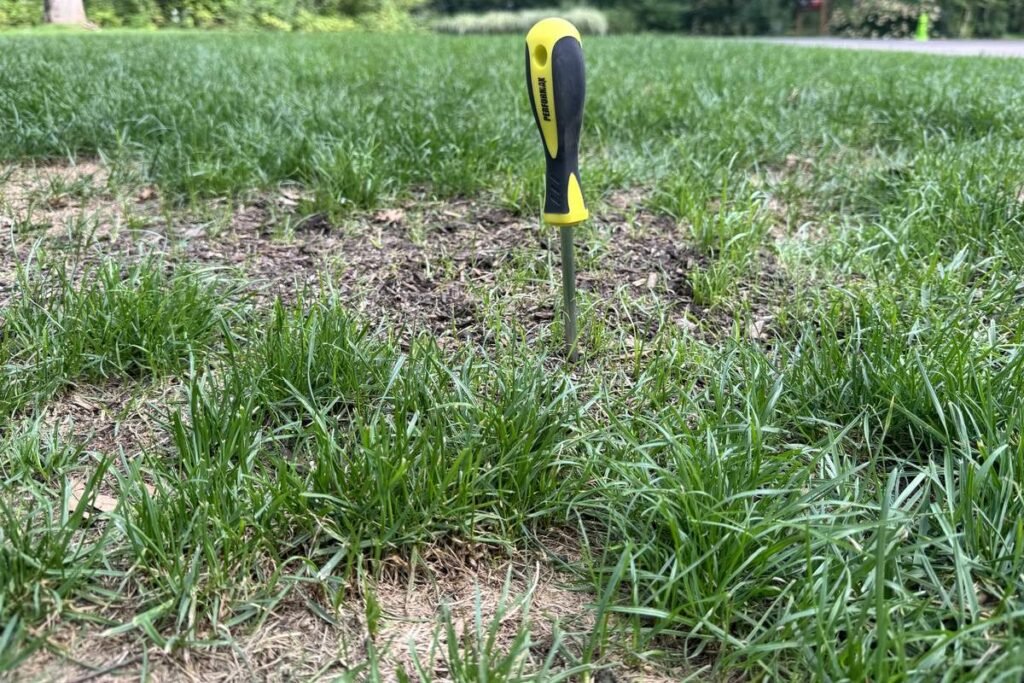
The fix: about an inch of water a week, delivered in one or two deep soakings rather than daily sprinkles. Deep and infrequent drives roots down; frequent and shallow keeps them at the surface where they’re helpless in July. Water in the early morning so the blades dry before evening.
Cause 4: Damage in Specific Spots
If your yellow has edges, it’s this category, and the pattern tells you which one.
Dog urine: a roughly circular dead or yellow spot, often ringed by grass that’s darker green than the rest of the lawn. That ring is the tell. Urine is concentrated nitrogen — enough to burn at the center, exactly right at the diluted edge. Nothing else produces that halo.
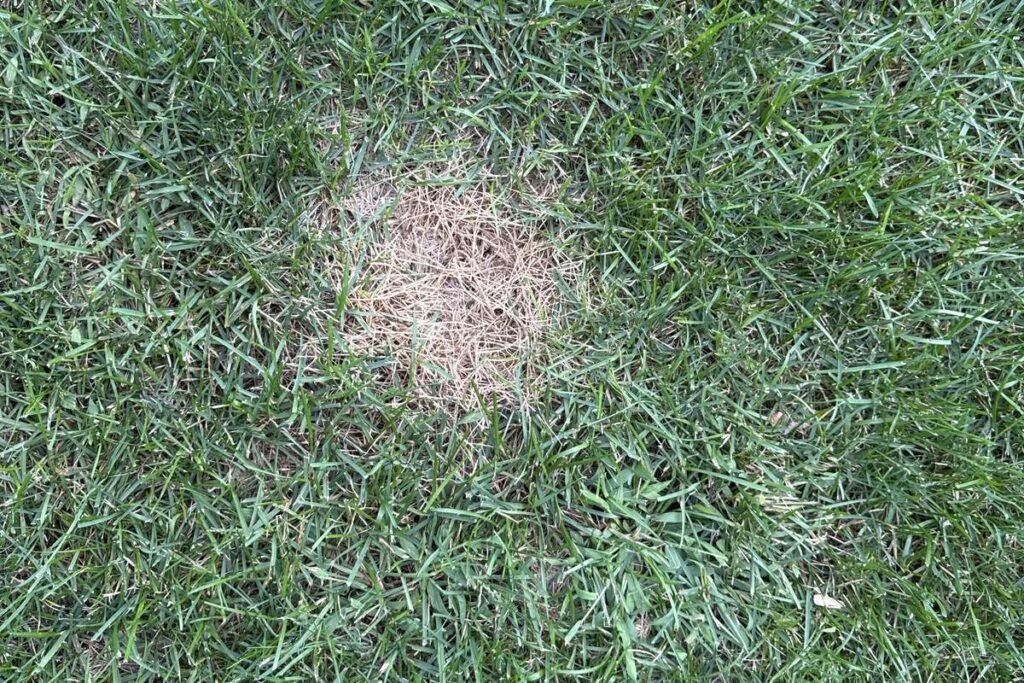
One caveat from my own yard: the ring only appears where a dog goes occasionally. In a spot she uses every day — and every dog has one — the whole area gets a full dose, there’s no diluted edge, and you just get a dead patch with no halo. If you can’t find the ring, look at where the dog actually goes before you rule it out.
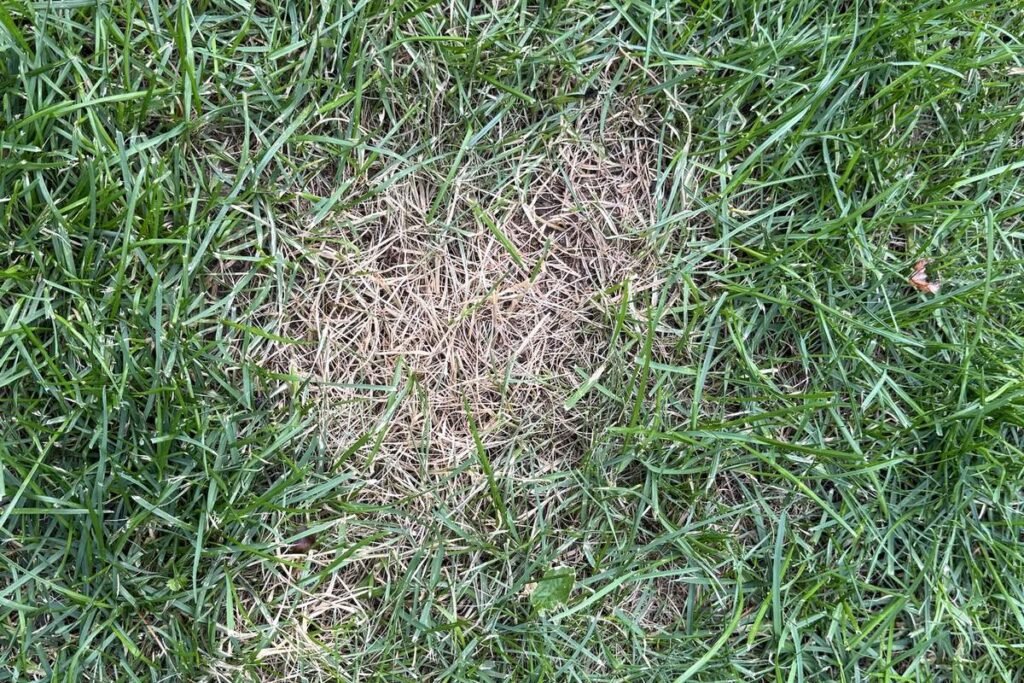
Fertilizer burn: yellow or brown in stripes or arcs that match how you walked with the spreader. If you can see your spreader pattern in the damage, you applied too heavily or on a day that was too hot, or granules sat on wet blades.
Grubs: irregular yellowing patches that feel spongy underfoot, and — the definitive test — the turf pulls up like a loose carpet, because the roots have been eaten off underneath. Grab a handful and tug. If it lifts with no resistance, dig a square foot and count what’s in the top two inches of soil.
Fungal disease: patches with distinct margins, sometimes ring-shaped, often appearing after a stretch of warm humid nights. Look early in the morning for fine webbing on the blades before dew burns off.
The Fifth One People Miss: Iron
Worth knowing because it looks exactly like a nitrogen problem and doesn’t respond to nitrogen at all.
Iron chlorosis shows up as yellowing between the veins of the blade while the veins themselves stay green — a striped effect you need to be close to see. It’s a soil pH problem rather than a fertility problem: alkaline soil locks iron up chemically so the plant can’t take it up, even though the iron is right there. Common on high-pH soils and near concrete, where lime leaches out of the foundation and driveway.
You can’t diagnose this from the surface. It takes a soil test, which is the only way to know your pH.
Before You Fix Anything: Some September Yellow Is Normal
Worth ruling out first, because the fix for this one is to do nothing.
Cool-season grass changes what it’s doing in the fall. As soil temperatures drop, the plant stops pushing top growth and starts moving energy into roots and crown for the winter. Older leaf tissue gets abandoned in the process. A lawn can look slightly duller in late September than it did in June and be in better shape than it was.
New seed does the same thing. Seedlings from a fall overseeding come up pale and thin for the first two or three weeks before they green up and thicken — that’s the plant building roots before leaves, which is exactly what you want it doing. Fertilizing hard to fix the color works against it.
How to tell normal from a problem: normal fall change is gradual, even, and the grass is still growing and still springs back when you walk on it. A problem is faster, patchier, or comes with one of the specific tells above — frayed tips, a dark ring, turf that lifts, soil a screwdriver won’t enter.
If you seeded this fall, give it three weeks before you diagnose anything. How to overseed a patchy lawn covers what those first weeks should look like.
The Ten-Minute Sequence
Do these in order and you’ll land on the answer nearly every time:
- Stand back. Uniform, or patchy with edges?
- Look at the blade tips. Clean cut, or shredded and frayed?
- Push a screwdriver in. Six inches easily, or stopped short?
- If it’s patchy, look for the pattern. Circles with dark rings, spreader stripes, spongy turf that lifts.
Then use the tool below, which walks the same sequence and tells you what it points to.
What’s Making Your Grass Yellow?
Four questions, based on what you can see standing in the yard. Answer honestly — the wrong diagnosis costs you a bag of fertilizer you didn’t need.
Where to Check Your Answer
Two sources worth having if you want to go deeper than this article. UW–Madison’s Division of Extension publishes lawn maintenance guidance written specifically for Wisconsin conditions, and their Learning Store has free downloadable publications on lawn fertilization and turf problems. Extension material is written by university turf researchers and has no product to sell, which makes it a better starting point than most of what you’ll find searching.
Three of These Have Been Mine
Three of these four have been mine. The dull blade went undiagnosed the longest — my lawn kept going yellow a day or two after every mow, and I never connected the two events. I sharpened the blades for unrelated reasons, and the color problem went away with it, which is when I understood what had been happening. The nitrogen one was easier: pale everywhere, growth slowed down, and a bag of fertilizer fixed it in about a week. And our dog leaves spots in the yard every summer, which I’ve mostly learned to live with. Once you know to look for the dark green ring, you stop wondering what caused them.
Four Things Not to Do
Most of the damage people cause to a yellow lawn happens after they diagnose it wrong.
- Don’t fertilize a lawn that’s yellow from too much water. The roots are the problem, not the nutrients. Nitrogen: a damaged root system can’t take it up either sits there or runs off.
- Don’t water more when the problem is compaction. If the screwdriver won’t go in, more water runs off rather than soaking down. Aeration is the fix, not the hose.
- Don’t apply anything to grass that’s dormant or drought-stressed in heat. Fertilizer on a plant that isn’t actively growing is fertilizer burn waiting for a hot afternoon. Water it back into growth first, then feed it.
- Don’t reseed a dog spot without flushing it first. The salts that killed the grass are still there. Water it heavily for a few days, then seed — otherwise you’re feeding new seedlings into the same conditions.
The Short Version
- Uniform yellow means feeding or mowing; patchy yellow with edges means water, soil, or damage
- Nitrogen deficiency is the most common cause and the only one fertilizer fixes
- A dull blade is the most overlooked cause — check the tips before you buy anything
- Both underwatering and overwatering produce yellow; the screwdriver tells you which
- A dark green ring around a dead circle is a dog, every time
- Yellow between green veins is iron and pH, and only a soil test will confirm it
If the answer came back as nitrogen, the next question is which bag to buy and how much of it — that’s covered in what the numbers on a fertilizer bag mean. If it came back as thin, patchy turf that needs filling in, how to overseed a patchy lawn covers the fall window.
The Lawn Product Checklist
What to actually buy, what to skip, and what the label should say — a one-page checklist you can take to the store.